PROTO ACW 32”
First Development Impressions
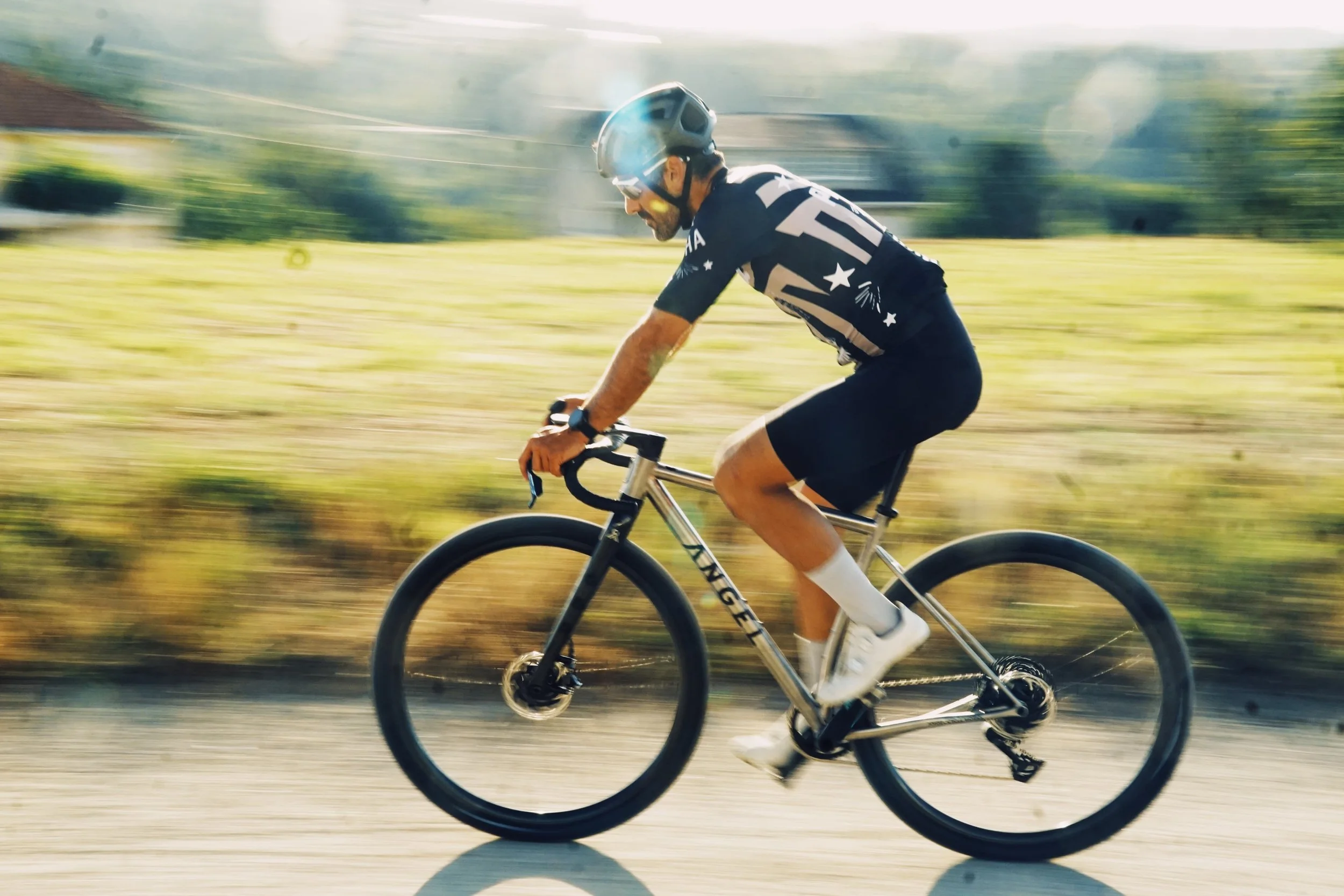
A few months ago, we asked ourselves a simple question: what would happen if we developed a gravel bike around 32-inch wheels?
With that idea in mind, we built our first prototype using the components and materials that were available to us, with one clear objective: get the bike on the road and start gathering real-world data.
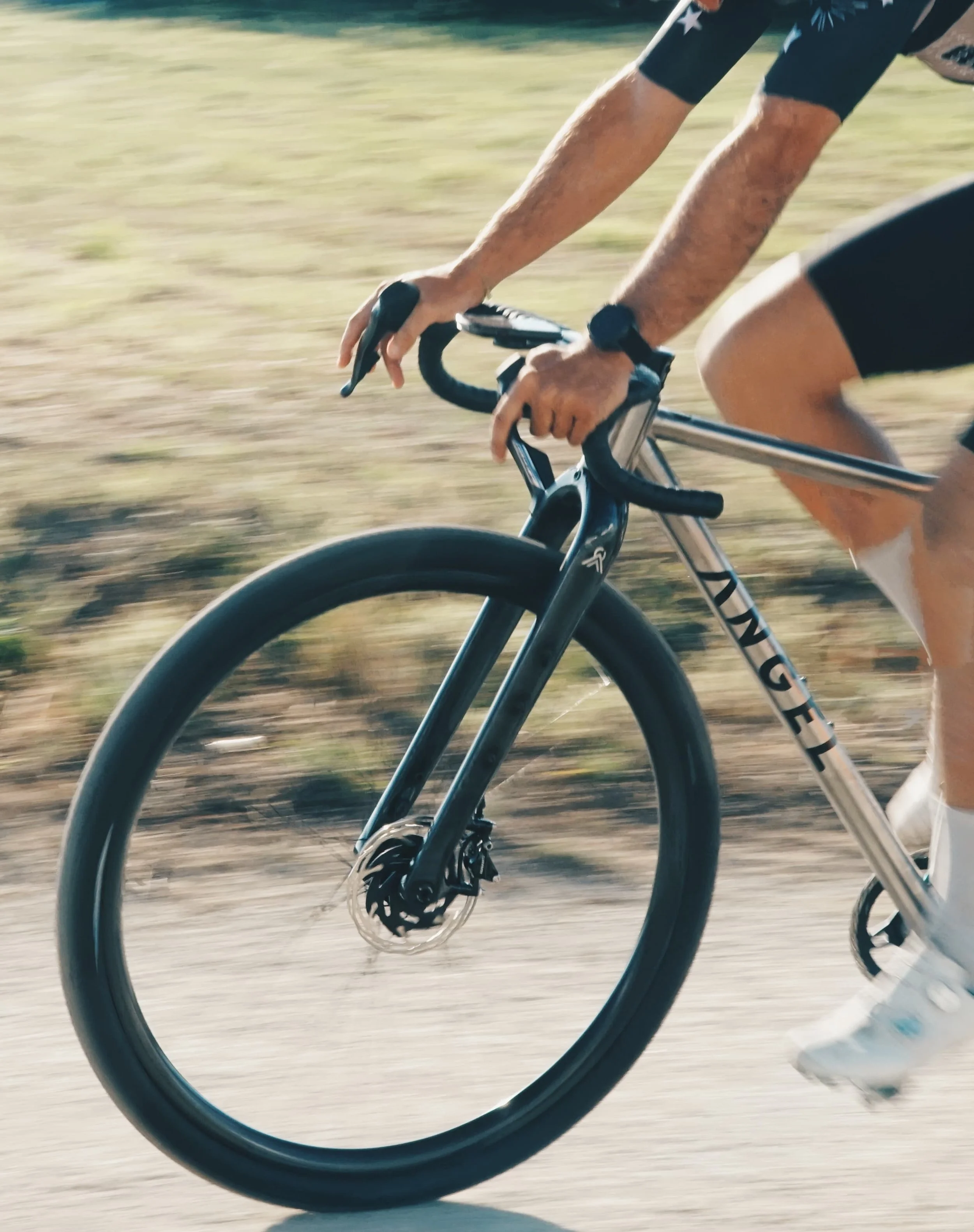
For this initial prototype, we used a mountain bike suspension fork, as no dedicated 32-inch gravel fork existed at the time. It was the best available solution to validate the concept. Today, we already have access to a purpose-built fork, which will allow us to continue refining the project.
The first tests confirmed that the MTB fork was simply too tall, raising the front end more than desired and affecting the bike’s geometry. Reducing the front-end height will therefore be one of the key objectives for the next iteration.
Another significant challenge was the tyres. Thanks to Schwalbe, we were able to use a 32” × 50 mm prototype tyre, giving us the opportunity to begin evaluating how a gravel bike of this configuration performs in real riding conditions.
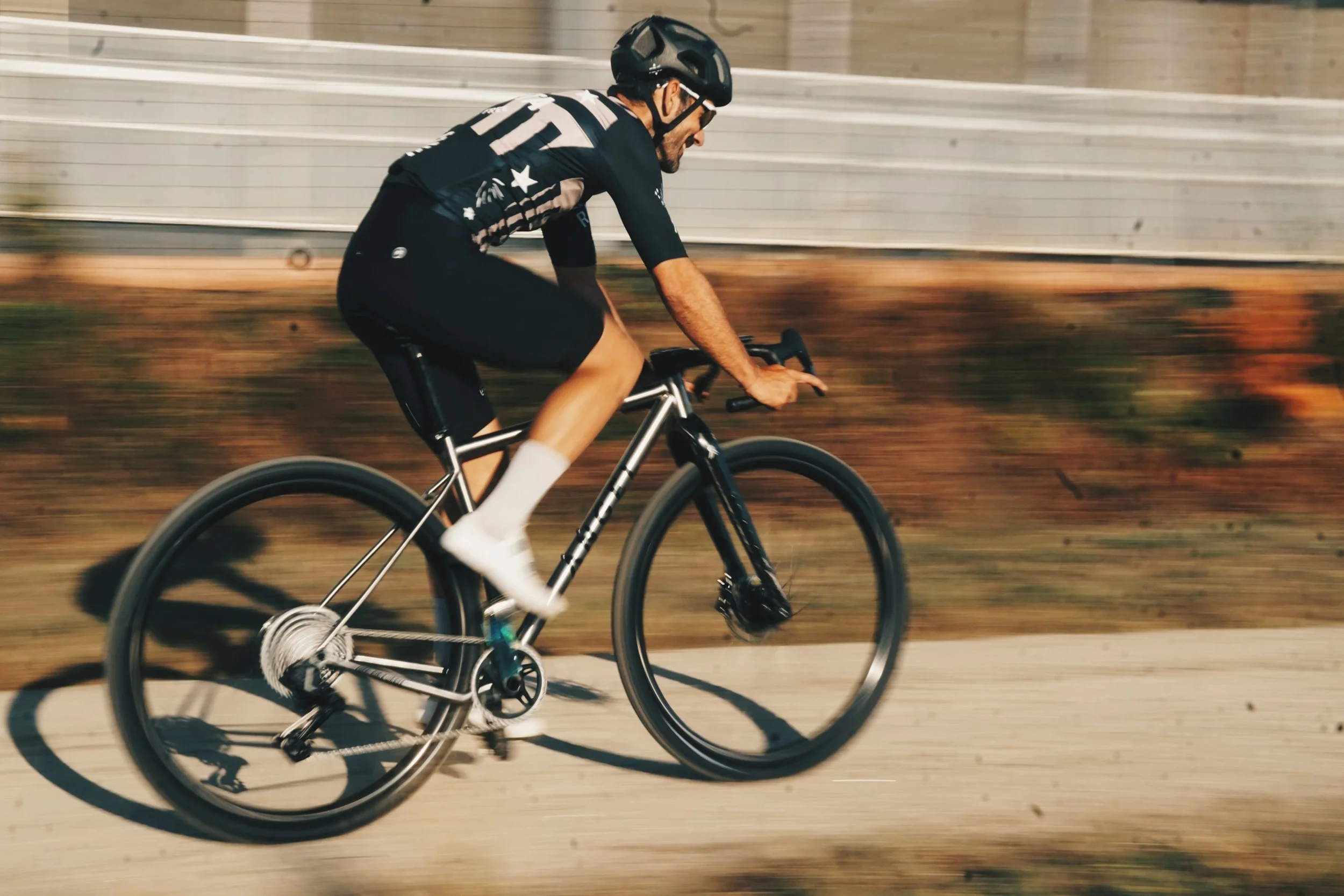
The rest of the bike was assembled using the components we had available, with the priority of getting the prototype rolling as quickly as possible and collecting meaningful feedback alongside our test rider, Jota.
The purpose of this first prototype was never to create a finished bicycle. Instead, it was designed to help us better understand the potential of a future 32-inch platform that could eventually be adapted across different frame sizes.
Our first impressions have been very encouraging. From a geometry and handling perspective, the bike performs remarkably well, both on flat terrain and during climbs and descents, confirming that the concept has real potential.
The testing has also highlighted areas that require further development.
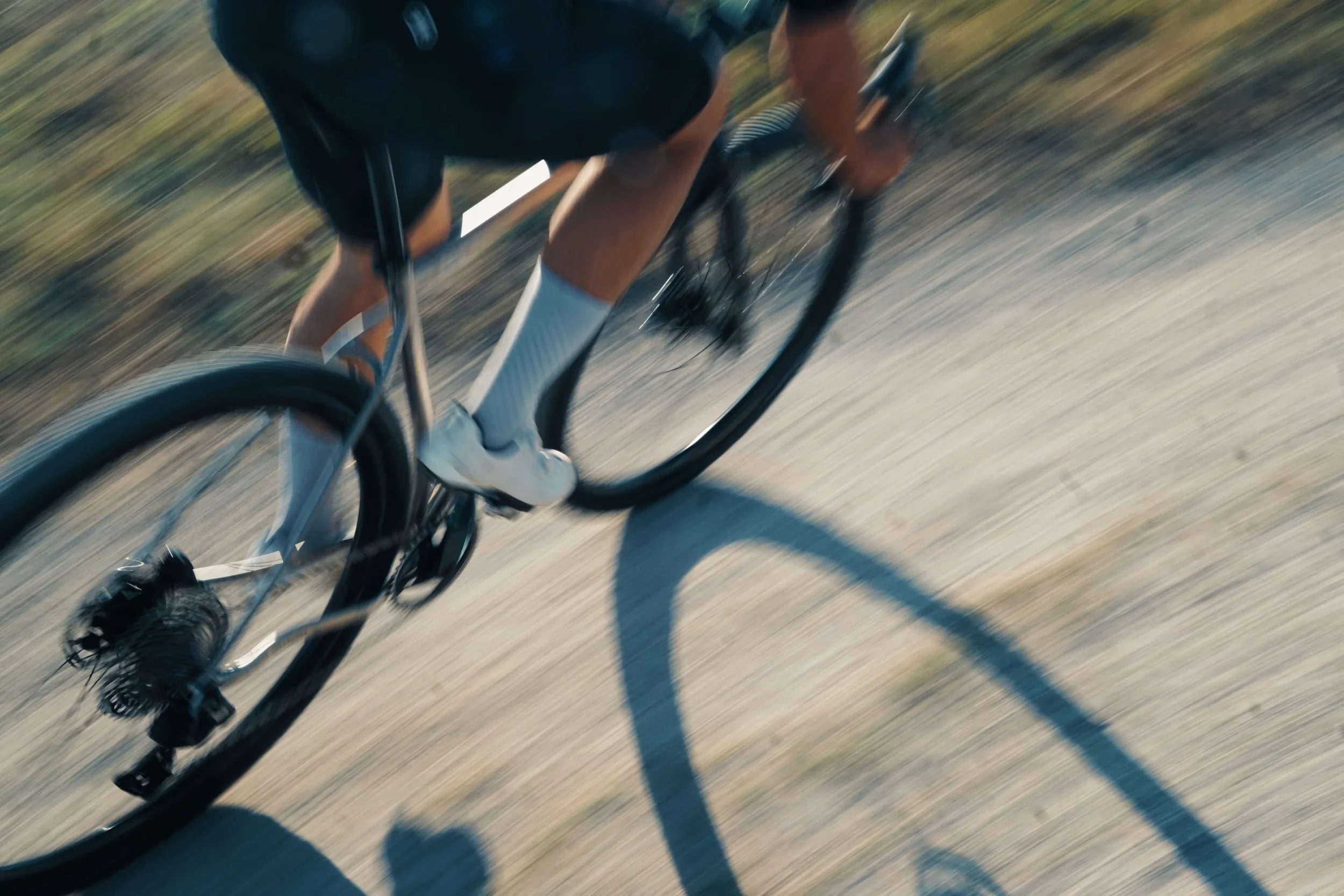
One of them is a slight amount of flex around the bottom bracket. We believe this is mainly caused by the combination of low-profile wheels with exceptionally long spokes, together with our decision to keep the chainstays as short as possible.
Without additional structural reinforcement in this area, the rear section of the frame flexes more than desired under heavy pedalling loads.
Aside from this, the bike has performed very well. Even on gradients of 14–15%, where any gravel bike is pushed into demanding territory, the prototype remained stable and predictable.
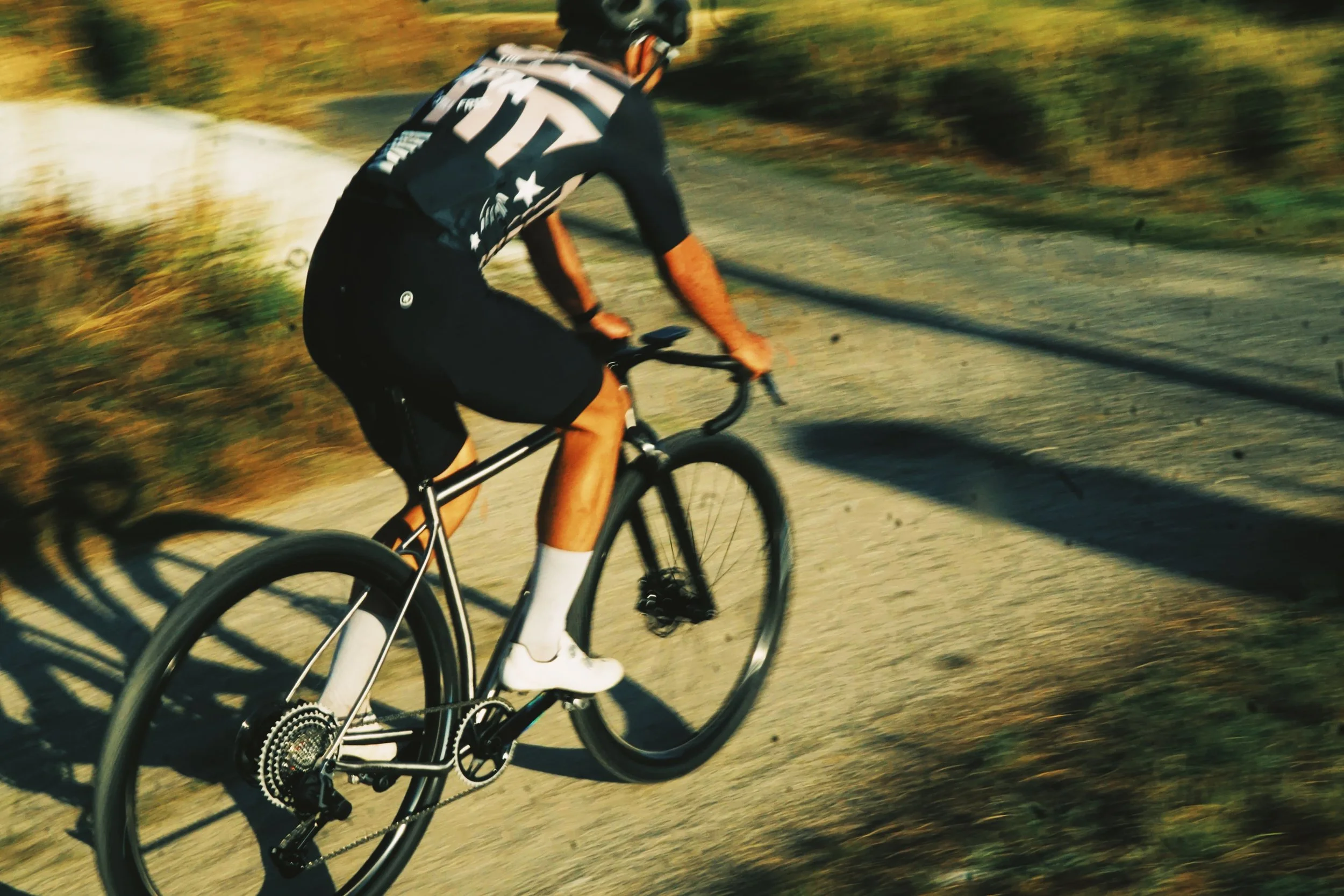
The next stage of development will focus on lowering the front end with the new fork and continuing to refine both the frame geometry and the overall structure as we move the project forward.
Interested in the ACW 32”?
Credits
Photography
Víctor — @galiciangravelcycling
Test Rider
Jota — @jotasv